100% Client-Side • Your Data Never Leaves Your Browser

How to Use the DIM Weight Calculator

A complete guide to calculating dimensional weight, understanding carrier divisors, and eliminating the hidden "Air Tax" that inflates your shipping costs.

Open the DIM Calculator

Step-by-Step Guide to the DIM Calculator

The DIM Weight Calculator helps you determine your billable shipping weight before you send a package. Carriers like FedEx, UPS, and DHL charge based on whichever is greater—your actual weight or your dimensional weight.

01

Enter Your Box Dimensions

Measure the external dimensions of your shipping box—length, width, and height at the longest points. Toggle between Imperial (inches) and Metric (centimeters). A 12×12×12 box has 1,728 cubic inches, translating to roughly 12.4 lbs of DIM weight with a 139 divisor.

02

Enter Your Actual Weight

Weigh your complete package including the product, all packaging materials, and the box itself. The calculator compares this against DIM weight to determine billable weight. If actual weight exceeds DIM weight, you're paying for real product, not air.

03

Select Your Carrier

Over 40 carrier presets with specific DIM divisors. FedEx/UPS use 139 for domestic, negotiated accounts often get 166. USPS Priority uses 166, DHL Express uses 139. Regional carriers vary from 166 to 194+. Correct carrier selection ensures accurate billing.

04

Review Your Results

Five key metrics: DIM Weight (volume-based), Billable Weight (actual or DIM, whichever is higher), Air Tax Percentage (portion of billable weight that's 'air'), Efficiency Score (how well product fills box), and 3D visualization of void space.

05

Optimize Your Packaging

If Air Tax is high, experiment with smaller boxes. Enable Product-to-Box mode to see void space. The calculator suggests optimal box sizes. Reducing dimensions by just one inch per side can significantly lower DIM weight—every cubic inch of void costs money.

The goal is to find the smallest box that safely fits your product with adequate protection. Use the 3D visualization to communicate packaging inefficiencies to your team and justify investment in custom box sizes.

Understanding carrier-specific divisors is critical for accurate cost forecasting. A 16×12×10 box shipping via FedEx Ground (divisor 139) has a DIM weight of 13.8 lbs. The same box via USPS Priority (divisor 166) calculates to 11.6 lbs—a 16% difference that compounds across hundreds of daily shipments. If your actual weight is 10 lbs, you'd pay for 13.8 lbs with FedEx but only 11.6 lbs with USPS. This spread determines which carrier wins your business for lightweight, bulky products.

E-commerce sellers often underestimate how DIM weight drives returns profitability. A customer returns a shirt in a 14×10×4 box rather than the original 8×6×4 shipped. The return label uses the same rate, but the DIM weight tripled from 1.4 lbs to 4.0 lbs. For prepaid returns, this cost hits your margin directly. Companies solving this problem provide return-specific packaging—flat mailers, reusable bags—that reduce return shipping costs by 30-50% simply by controlling the box dimensions customers use.

Zone-based pricing adds another layer to DIM weight optimization. A package shipping across the country (Zone 8) costs significantly more per pound than a local delivery (Zone 2). When DIM weight is 50% higher than actual weight, that penalty scales with zone. The calculator helps you visualize this relationship before committing to packaging decisions. Many operations discover that investing in custom-sized boxes for their highest-volume SKUs pays back in weeks through reduced DIM charges.

The Hidden Air Tax in Your Shipping Costs

When dimensional weight was introduced in the 1980s, it revolutionized how carriers priced lightweight, bulky shipments. Before DIM pricing, a box of pillows shipping cross-country cost the same as a box of books—clearly unfair since the pillows consumed far more truck space relative to their weight. DIM weight fixed this imbalance, but it also created a new challenge for shippers: optimizing packaging to minimize the spread between actual weight and dimensional weight.

Most e-commerce operations use standardized boxes for packing efficiency—six or eight box sizes that packers can grab quickly. But standardization creates DIM weight waste.

💡 Key Insight: Companies auditing their packaging often discover 20-40% of shipments are over-boxed—packed in larger containers than necessary, doubling DIM weight for convenience.

Understanding the Air Tax

The "Air Tax" is the difference between your actual weight and your billed DIM weight. If your package weighs 5 pounds but has a DIM weight of 12 pounds, you're paying for 7 pounds of air. For an e-commerce business shipping 1,000 packages per month, that's $5,000-$10,000 annually in avoidable charges.

Understanding DIM weight is especially critical for lightweight, voluminous products like home decor, apparel, pet products, and consumer electronics. These categories routinely see 40-60% Air Tax rates.

The Financial Impact at Scale

The financial impact scales dramatically with business size. A small business shipping 100 packages monthly might lose $500-1,000 annually to Air Tax. Mid-size operations shipping 2,000 packages face $10,000-20,000 in unnecessary costs. Enterprise shippers with 50,000+ monthly packages can lose hundreds of thousands annually.

Beyond direct costs, DIM weight affects pricing strategy and competitiveness. If your competitors have optimized their packaging while you haven't, they can offer free shipping at lower thresholds that would be unprofitable for you.

📊 By the Numbers: Switching from a 12×12×12 box to 10×10×10 saves 1 lb of billable weight at $0.30/lb = $0.30 savings per shipment. At 1,000 monthly shipments, that's $3,000 annual savings.

Carrier Selection and Negotiations

Understanding carrier-specific divisors is critical for accurate cost forecasting. A 16×12×10 box shipping via FedEx Ground (divisor 139) has a DIM weight of 13.8 lbs. The same box via USPS Priority (divisor 166) calculates to 11.6 lbs—a 16% difference that compounds across hundreds of daily shipments.

If your actual weight is 10 lbs, you'd pay for 13.8 lbs with FedEx but only 11.6 lbs with USPS. This spread determines which carrier wins your business for lightweight, bulky products. Zone-based pricing adds another layer—cross-country Zone 8 shipments cost significantly more per pound than local Zone 2, amplifying the DIM penalty.

E-commerce sellers often underestimate how DIM weight drives returns profitability. A customer returns a shirt in a 14×10×4 box rather than the original 8×6×4 shipped. The return label uses the same rate, but the DIM weight tripled. Companies solving this provide return-specific packaging that reduces costs by 30-50% simply by controlling the box dimensions customers use.

How Dimensional Weight is Calculated

The dimensional weight formula is straightforward: multiply length times width times height to get cubic volume, then divide by the carrier's DIM divisor. In Imperial units (inches and pounds), the formula is: DIM Weight = (L × W × H) ÷ DIM Divisor. A 12x12x12 inch box has 1,728 cubic inches. Divided by 139 (FedEx/UPS standard), that's 12.4 pounds of DIM weight. Divided by 166 (USPS/negotiated), it's 10.4 pounds. The divisor makes a significant difference.

Most carriers round DIM weight up to the next whole pound. Some apply fractional billing (charging for half-pounds), but the default is ceiling rounding. This means a box with a calculated DIM weight of 12.1 pounds gets billed as 13 pounds. Understanding this rounding behavior is critical for packaging optimization—reducing dimensions by just enough to drop below a rounding threshold can save money on every shipment.

The DIM divisor itself represents the assumed density of a shipment. A divisor of 139 means the carrier assumes 139 cubic inches equals 1 pound of billable weight. Lower divisors are more aggressive—they assume lower density and charge more for volume. When carriers lowered the standard divisor from 166 to 139 in 2015, it represented a 16% effective rate increase on DIM-billed shipments without changing published rates. Negotiating a higher divisor (like 166 or 194) is one of the most valuable concessions shippers can pursue.

For metric users, the formula uses centimeters and kilograms. DIM Weight (kg) = (L × W × H in cm) ÷ 5,000. The 5,000 divisor is standard for international shipments and roughly equivalent to a 139 divisor in Imperial units. Some carriers use 6,000 or higher for metric calculations, so always verify your specific carrier's policy before quoting international shipments.

Understanding Carrier DIM Divisors

CarrierDivisor (Imperial)Divisor (Metric)Notes
FedEx Ground/Express1395,000Standard rate, negotiable
UPS Ground/Air1395,000Standard rate, negotiable
USPS Priority166N/ABetter for bulky items
DHL Express1395,000International standard
Regional (OnTrac, LSO)166-250VariesCompetitive advantage

FedEx and UPS both use 139 as their standard domestic DIM divisor. This applies to FedEx Ground, FedEx Express, UPS Ground, UPS 2nd Day Air, and most other domestic services. However, if you ship significant volume (typically 500+ packages per week), you can negotiate a higher divisor. Many enterprise shippers operate on 166, 194, or even custom divisors. The difference between 139 and 166 is roughly 16% lower DIM weight on every package—substantial savings at scale.

USPS Priority Mail and Priority Mail Express use 166 as their standard divisor, making them more attractive for lightweight, bulky items compared to FedEx/UPS standard rates. However, USPS also has cubic pricing tiers for packages under 20 pounds and certain dimensions, which can be even more cost-effective. The DIM Weight Calculator shows USPS rates alongside major carriers so you can compare options.

DHL Express uses 139 for domestic shipments in many markets but applies 5,000 (metric equivalent) for international. International shipments also face destination-country customs regulations that may impose additional dimensional requirements. Regional carriers like OnTrac, LSO, and Spee-Dee often use higher divisors (166-250) as a competitive differentiator against FedEx/UPS, making them attractive options for DIM-heavy shippers in their service areas.

Amazon Seller Fulfilled Prime and FBA have their own DIM calculations that differ from carrier rates. Amazon FBA uses 139 for standard-size items but applies different dimensional thresholds for size tier classification. Understanding these tiers is critical because a product that qualifies as "standard-size" costs significantly less in FBA fees than one classified as "oversize"—even if the actual dimensions are nearly identical.

Common DIM Weight Mistakes to Avoid

The most expensive mistake is using oversized boxes habitually because "they're already on the shelf." Shipping a small product in a medium box because you ran out of small boxes costs money on every shipment. Maintain inventory of appropriately-sized packaging for your top-selling SKUs. The cost of stocking 5-6 box sizes is far less than the annual Air Tax from using wrong-size boxes.

Measuring internal box dimensions instead of external dimensions causes billing surprises. Carriers measure the outside of your box, including the thickness of corrugated cardboard walls. A box advertised as "12x12x12 internal" might measure 12.5x12.5x12.5 externally, and that extra half-inch on each side adds 9% more cubic volume. Always measure external dimensions when calculating DIM weight.

Ignoring the rounding rules leads to suboptimal packaging choices. If reducing your box by one inch drops your DIM weight from 13.1 to 12.9 pounds, you save nothing—both round to 13 pounds (for carriers using ceiling rounding). But if that reduction takes you from 13.1 to 12.4 pounds, you save a full pound of billable weight. Target changes that cross rounding thresholds, not arbitrary dimension reductions.

Failing to renegotiate your carrier contract costs money every day. If you're shipping on standard 139 divisor rates while competitors have negotiated 166, you're paying 16% more for every DIM-billed package. Contact your carrier rep and request a DIM divisor review, especially if your shipping volume has increased. Volume commitments and long-term contracts can unlock divisor improvements even for mid-size shippers.

Not auditing your carrier invoices for DIM errors leaves money on the table. Carriers sometimes measure dimensions incorrectly, apply wrong divisors, or bill at incorrect service levels. Automated carrier audit services typically find 2-5% in recoverable overcharges, and most work on contingency—you only pay if they recover money. Given the complexity of DIM calculations across thousands of shipments, manual verification is impractical, but automated audits pay for themselves many times over.

Frequently Asked Questions

What is the difference between 139 and 166 divisor?

The DIM divisor determines how aggressively volume is converted to billable weight. A 139 divisor means 139 cubic inches equals 1 pound. A 166 divisor means 166 cubic inches equals 1 pound. With 166, you get about 16% lower DIM weight on the same box. Standard retail rates from FedEx and UPS use 139, but high-volume shippers can negotiate 166 or higher. USPS Priority Mail uses 166 by default, making it more competitive for lightweight, bulky items.

How do I reduce my DIM weight without changing products?

Focus on packaging optimization. Use right-sized boxes that leave minimal void space around your product. Replace bulky void fill like packing peanuts with space-efficient options like air pillows or kraft paper. Consider switching from rigid boxes to poly mailers for durable, flat products. Evaluate whether products can be repackaged or reoriented to fit smaller box dimensions. Even small reductions compound significantly across thousands of shipments.

Does every carrier use DIM weight pricing?

All major parcel carriers apply DIM weight to some degree. FedEx, UPS, DHL, and USPS all use dimensional pricing for packages above certain size thresholds. Some services like USPS First Class Package have weight limits that effectively cap DIM exposure. Regional carriers and consolidators vary in their application—some use higher divisors as a competitive advantage, while others match major carrier policies. Always verify the specific DIM rules for each service you use.

What is Air Tax percentage?

Air Tax percentage represents the portion of your billable weight that's based on package volume rather than actual weight. If your actual weight is 5 pounds and your billable weight is 12 pounds (because DIM weight is 12), your Air Tax is 58%—7 pounds out of 12 billable pounds is "air." An Air Tax of 0% means you're paying for actual weight only. The higher your Air Tax, the more opportunity you have to save through packaging optimization.

How accurate is this calculator compared to carrier invoices?

The calculator uses the same DIM formulas and divisors that carriers publish. Results should match your invoices when you select the correct carrier and service. Discrepancies typically occur when carriers measure slightly different dimensions than you input, when dimension rounding rules differ, or when your account has a negotiated divisor different from the standard. Use the custom divisor option if you have a non-standard carrier agreement.

Calculate Your DIM Weight Now

Enter your dimensions, select your carrier, and see exactly how much Air Tax you're paying. All calculations happen in your browser.

Open DIM Calculator

Rate Disclaimer

This calculator provides dimensional weight estimates based on published carrier divisors. Actual billing may vary based on your negotiated rates, carrier measurement methods, and service-specific rules. Always verify final shipping costs with your carrier before making pricing decisions. Carrier policies change frequently—confirm current DIM divisors with your account representative.

Related Topics & Tools

Freight Class 92.5: Products, Density, and Rates

Freight class 92.5 applies to LTL shipments with a density of 10 to 12 pounds per cubic foot (PCF). It sits between class 100 (8–10 PCF) and class 85 (12–15 PCF) on the NMFC 13-tier density scale. Common products shipping at class 92.5 include auto parts, computer hardware, moderately dense furniture, packaged industrial goods, and other mid-density manufactured items. Use the MetricRig Freight Class Calculator at /logistics/freight-class to confirm your shipment's PCF and class before booking an LTL shipment.

Read More

Single vs Multi-Source Suppliers: Risk and Cost Trade-Offs

Single sourcing typically produces unit costs 10–20% lower than multi-sourcing due to volume consolidation and negotiating leverage, but transfers near-total supply chain risk to one relationship. Multi-sourcing adds 5–15% in qualification, management, and per-unit costs while reducing disruption risk, improving lead time flexibility, and maintaining competitive pricing pressure across suppliers. In 2026's tariff-volatile, geopolitically disrupted environment, most supply chain professionals are moving toward dual or multi-sourcing for any component representing more than 10% of COGS. Use the MetricRig Landed Cost Calculator at /logistics/landed-cost to model how sourcing splits affect your total landed cost per SKU.

Read More

Agentic AI in Warehouse Management: 2026 Cost and ROI Guide

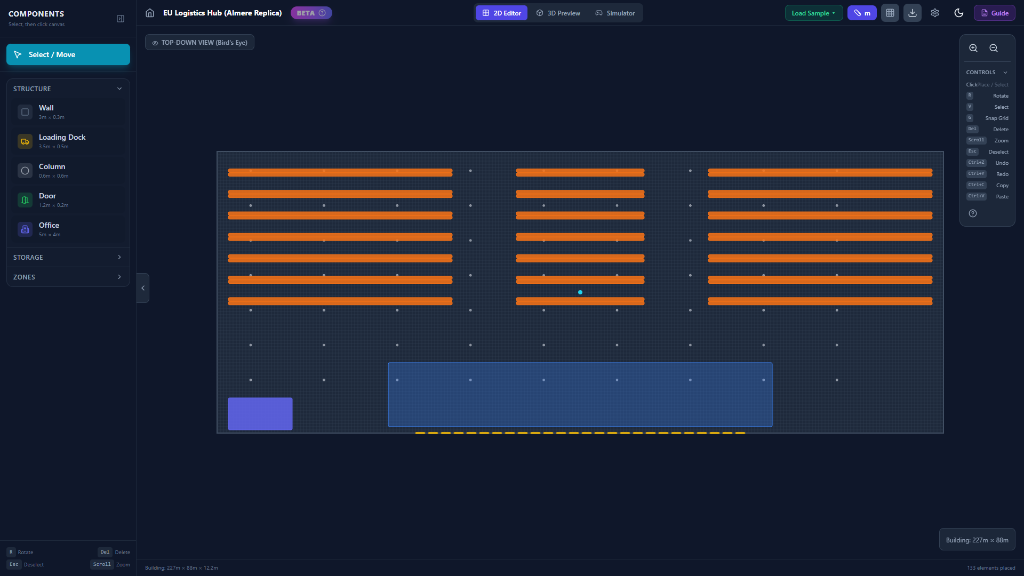
Agentic AI in warehouse management refers to AI systems that autonomously plan, execute, and adapt multi-step tasks — from slotting optimization and dynamic pick-path routing to automated replenishment — without human instruction on each step. In 2026, early adopters are reporting 25–40% reductions in labor cost per pick and order accuracy rates above 99.9%. Deployment costs range from $500,000 for a mid-size retrofit to over $3 million for a greenfield automated distribution center. Use the MetricRig Warehouse Space Planner at /logistics/warehouse-rig to model how an AI-optimized layout changes your cost per square foot and pallet density before committing to a capital investment.

Read More

FedEx and UPS Shipping Zone Map Explained for 2026

FedEx and UPS divide the continental United States into shipping zones numbered 2 through 8, where Zone 2 represents the shortest delivery distance from your ship-from ZIP code (roughly within 150 miles) and Zone 8 represents cross-country delivery (1,800 or more miles). Zones are not fixed geography — they are origin-relative, meaning the same destination ZIP code will be Zone 5 from a Dallas warehouse and Zone 8 from a Seattle warehouse. The per-pound rate difference between Zone 2 and Zone 8 on FedEx Ground in 2026 ranges from $4 to $18 per package depending on weight, making your origin ZIP code one of the single most important cost variables in your parcel shipping program. Use the MetricRig DIM Weight Rig at metricrig.com/logistics/dim-rig to calculate your exact billable weight per package — because zone rates multiply against billable weight, not actual weight.

Read More

Country of Origin Labeling Requirements US 2026

Every article of foreign origin imported into the United States must be legibly, conspicuously, and permanently marked with its country of origin in English — for example, "Made in China" or "Product of Vietnam" — as required by 19 U.S.C. §1304 and enforced by CBP at every port of entry. Failure to properly mark imported goods results in a marking duty of 10% of the customs value of the unmarked merchandise, assessed in addition to regular duties, plus potential seizure and destruction of non-compliant goods. For domestic manufacturers using the "Made in USA" claim, the FTC requires that all or virtually all of the product be made in the United States, a standard that courts and the FTC have interpreted to mean essentially 100% US content and processing. Use the free Landed Cost Calculator at metricrig.com/logistics/landed-cost to model marking-related costs and duties in your full import cost structure.

Read More

Supplier Diversification Cost vs Benefit 2026

Supplier diversification — maintaining two or more qualified suppliers for the same component or product — reduces supply chain disruption risk but adds real, quantifiable costs including supplier qualification expenses ($5,000-$50,000 per new supplier), higher unit costs from lower volumes split across suppliers (typically 3-12% price premium for the secondary source), and increased procurement and quality management overhead. The break-even for dual sourcing occurs when the expected annual disruption savings exceed the annual diversification cost premium, which for most mid-size importers happens when a single-source supplier carries more than a 3-5% annual probability of a meaningful supply disruption. In 2026, with Section 301 tariff escalation, China export controls on critical materials, and ongoing geopolitical volatility, the probability of supply disruption from single-source China suppliers is widely estimated at 8-15% annually for many product categories — making diversification economically justified for most programs above $2 million in annual spend. Use the free Landed Cost Calculator at metricrig.com/logistics/landed-cost to compare the landed costs of primary and secondary source options.

Read More